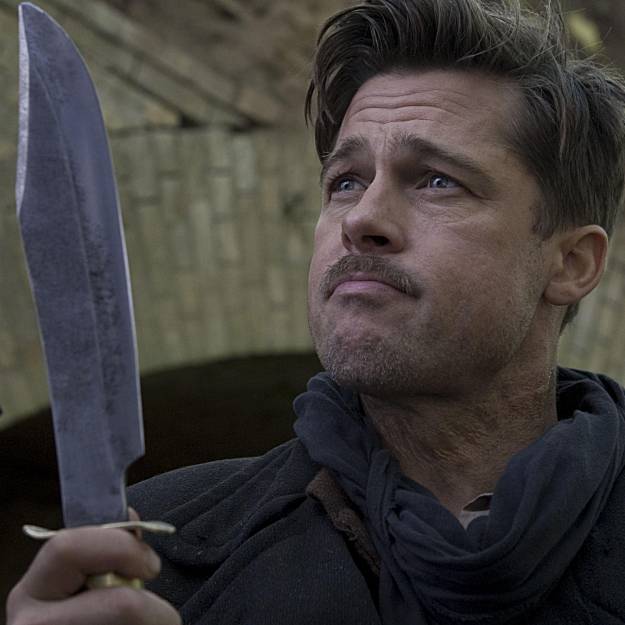
Best picture winners can never be completely forgotten but name recognition is not the same as love or respect. In the light of film history most past winners look sad and safe artistically and politically bland, pedestrian in their approach and bloated in form. A movie like �Driving Miss Daisy,� for example, doesn�t embody what was excellent about cinema in its year (1989). It does quite the opposite: It immortalizes its era�s most obvious misconceptions - about art, movies, human relationships even the truth itself.
 Yet in any given year, there is usually one movie that constitutes an artistic breakthrough. That movie is rarely the most technologically innovative (like, say, �Avatar�), because nothing dates faster than technology. And it�s usually not the most popular, because popular movies tend to be people pleasing, and when that becomes the main priority, a good deal of honesty goes out the window.
A breakthrough movie is rather one that, through form, content or both, is so intriguing and arresting and in some cases infuriating that everyone has to have an opinion about it. Sometimes it�s a film that heralds a new direction, that looks like the start of a possible trend or movement. Often, it�s a film strongly guided by a singular directorial vision. �Citizen Kane� is what happened in cinema in 1941. Not everybody liked it, but it�s what happened that year, and look how it�s lauded today.
The same could be said for �Apocalypse Now,� which is what happened in cinema in 1979. Or �Bonnie and Clyde,� which is what happened in 1967. Not everybody liked those either. It�s all very nice when a movie is good enough to like. These were great enough to hate, which is better.
The same could be said for Spike Lee�s �Do the Right Thing,� which was snubbed the year �Driving Miss Daisy� won. Actually, twobreakthrough movies happened that year, and neither had anything to do with Morgan Freeman driving around a cranky old lady. Steven Soderbergh�s debut, �sex, lies, and videotape,� a terrific film in its own right, sounded the beginning of the independent film movement.
So that�s the question the members of the Academy of Motion Picture Arts and Sciences should consider asking themselves, assuming they really want to pick a best picture that�s both reasonable today and doesn�t stink in the nose of history a generation down the line: What movie represents the thing that happened in cinema this year?
For 2009, the answer is obvious: �Inglourious Basterds.� It�s brilliant, audacious, innovative, the product of a highly personal vision; it evinces an artist�s understanding of all that has gone before, and it has a strong visceral impact. In 100 years, if someone writes a book about movies in the first decade of the 21st century, �Inglourious Basterds� will be on the cover.
But a decent second choice among the nominees would be �The Hurt Locker,� which is not quite as brilliant, not quite as audacious, but almost as innovative, and which is also the product of a director�s highly personal vision. If academy members don�t have the stomach to vote for the true best film of the year, they should at least find the courage to vote for the year�s second best film. Anything short of that would be a joke.
But wait, you might ask, doesn�t the academy sometimes get it right? Yes, occasionally, it does: For example, �Grand Hotel� (1932), �The Godfather� (1972), �Amadeus� (1984), �Schindler�s List� (1993). Yet when I see these titles, and others, I wonder. Didthe academy laud these films for their artistry, or rather for their scale and popularity? In other words, did they just happen to like these masterpieces by accident?
This is not a facetious question, but the inevitable consequence of observation. The academy, for example, likes its filmmaking on a grand scale, but it shies away from any grand-scale movie that suggests a one man show, that seems mainly the product of a single filmmaker�s hard-edged brilliance (like �Inglourious Basterds�). So �Citizen Kane� was slighted in favor of �How Green was My Valley.� �Pulp Fiction,� thebreakthrough film of 1994, was rejected in favor of the utterly insipid �Forrest Gump.� And 30 years later, the academy still hasn�t lived down its choice of �Ordinary People� over �Raging Bull,� the most important film of 1980 - and probably of the decade.
The academy wants its best pictures to reflect well on the industry, to be in good taste, the key ingredient in weak art. So Robert De Niro�s getting pounded in the ring and spraying blood in all directions was just not going to cut it with academy voters. Neither was the spectacle, 10 years later, of Joe Pesci�s slicing up a �made guy� in the trunk of a car in �GoodFellas,� thebreakthrough film of 1990. That year, the Oscar instead went to �Dances With Wolves,� a pretty good movie that couldn�t offend anyone, certainly not with its uplifting message about the value of American Indian culture.
Funny thing about the academy. It likes honoring movies with liberal political and social messages, but only at a point when those ideas have become so mainstream that no one could disagree. Oliver Stone�s �JFK,� though brilliantly made, politically daring and an artisticbreakthrough in terms of editing and storytelling, didn�t have a chance with academy voters in 1991. Instead of Stone�s frightening political horror story,the academy chose to honor the more quaint, comforting traditional horror offered by �The Silence of the Lambs,� with its lovable villain who liked to eat people.
In 1981, everyone thought �Reds� would win best picture, for the zany reason that it was the best film of the year. But see, it was called �Reds,� as in the communists. The Oscar instead went to �Chariots of Fire.�
Perhaps the strangest example of the academy�s social and political squeamishness came in 2005. �Brokeback Mountain� was the breakthrough movie of that year. I don�t think it was the year�s best film (I�d choose �The New World�), but its story of two gay cowboys made it the movie to see and to have an opinion about. It was certainly the best of the five films nominated, all of which had social or political themes. The others were �Good Night, and Good Luck,� which used the story of Edward R. Murrow to encourage today�s news media to aggressively track down government lies; �Capote,� with a flamboyant gay protagonist; �Munich,� a tortured, adult examination of terrorism and its repercussions; and �Crash,� a movie about race relations that basically said that people should all get along.
At the time, everyone was shocked that �Brokeback Mountain� lost, but look at those five nominees and what they were saying. The only movie up there expressing absolutely nothing that anybody could find fault with was �Crash.� Can�t we all get along? Brilliant! Give that movie an Oscar.
But if the academy, instead of looking backward, looked forward - if instead of trying to console itself, challenged itself - we wouldn�t see such silly choices. �42nd Street� would have won in 1933, not �Cavalcade.� �The Great Dictator� would have won in 1940, not �Rebecca.� And �Who�s Afraid of Virginia Woolf?� would have won in 1966, not the well-meaning but turgid �A Man for All Seasons.� Had academy members started long ago to ask themselves, �What movie was the thing that happened in cinema this year?� we might have seen even more adventurous choices than the ones I�ve mentioned. Why not, for example, �Three Days of the Condor� - a prescient, disturbing film - instead of �One Flew Over the Cuckoo�s Nest?� in 1975.
Or, if you don�t like that one, why not �Before Sunrise� instead of �Braveheart� in 1995? A hundred years from now, people will still be watching Celine (Julie Delpy) and Jesse (Ethan Hawke) fall in love in Vienna; meanwhile, no one is watching �Braveheart,� even now.
For that matter, what about �Dr. Strangelove� in 1964 instead of �My Fair Lady?� Or better yet, what about �A Hard Day�s Night?� that same year. Think about it. �My Fair Lady� and the Beatles� debut film were both fine musicals, but one looked back, the other looked ahead; one was grounded in the cinematic language of the past, while the other blazed a trail in terms of editing, pace and attitude.
Now that I think about it, nothing could be more obvious. �A Hard Day�s Night� was the thing that happened in cinema in 1964. Sometimes it takes more than 40 years to realize it.
 Angelina Jolie along with children Maddox, 9, Zahara, 6, Pax, 7, Shiloh, 4, and twins Vivienne and Knox, 2 arrived in New Orleans via private plane Friday.